
February blahs . . . ?
Nah . . .

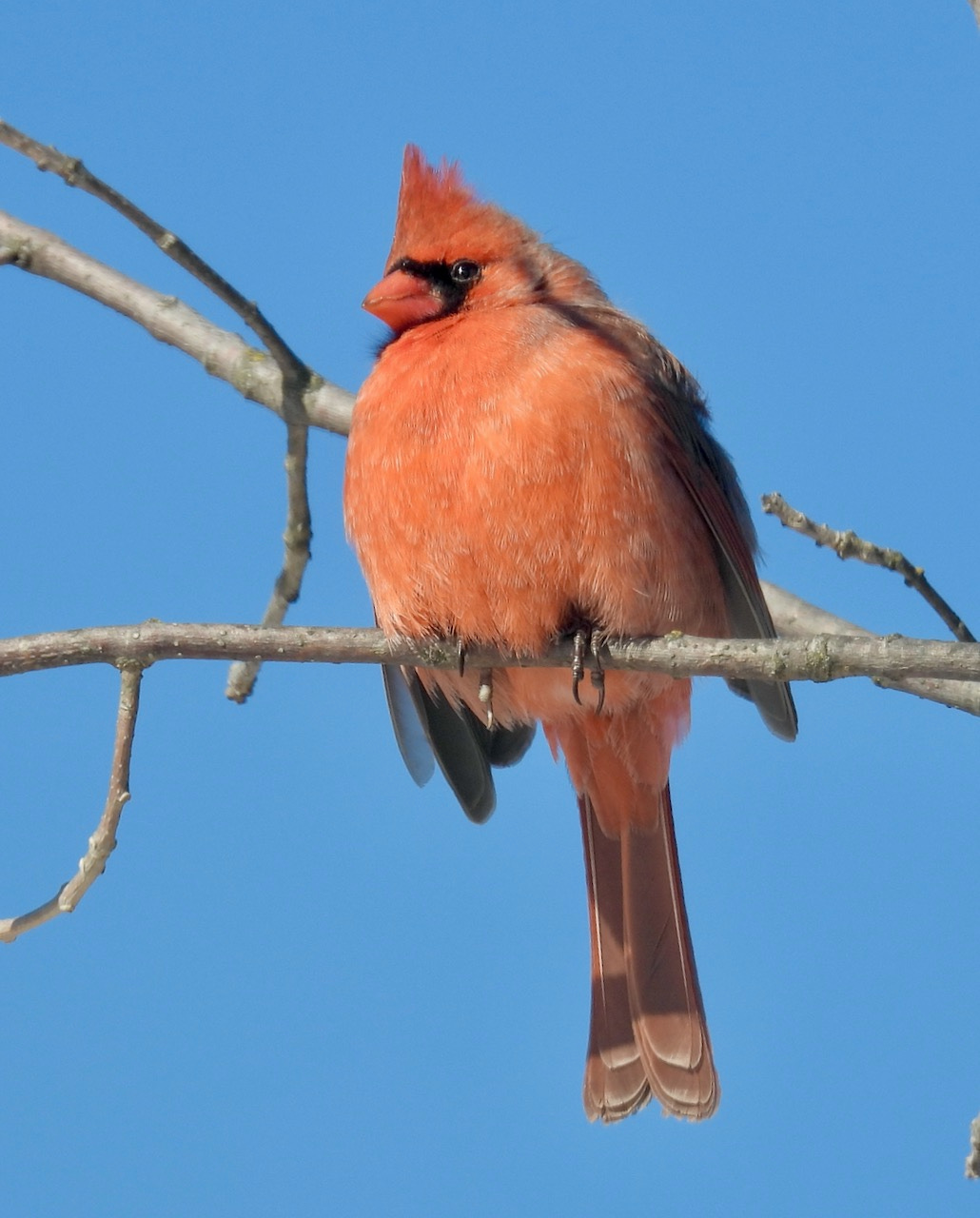
Tufted titmice and northern cardinals greet the slowly climbing sun with jaunty calls of “peter-peter-peter,” and “cheer, cheer.”
Hormone-charged barred owls eight-hoot from the woodlot day and night. barred owl From Cornell Laboratory of Ornithology)(
We winter-weary humans grasp at such early signals of approaching spring – with the realization that February in Iowa can bring just about any combination of weather.
Fifty-plus degree days may plummet into the teens, accented by white-out snow squalls, which set the stage for below-zero nights.
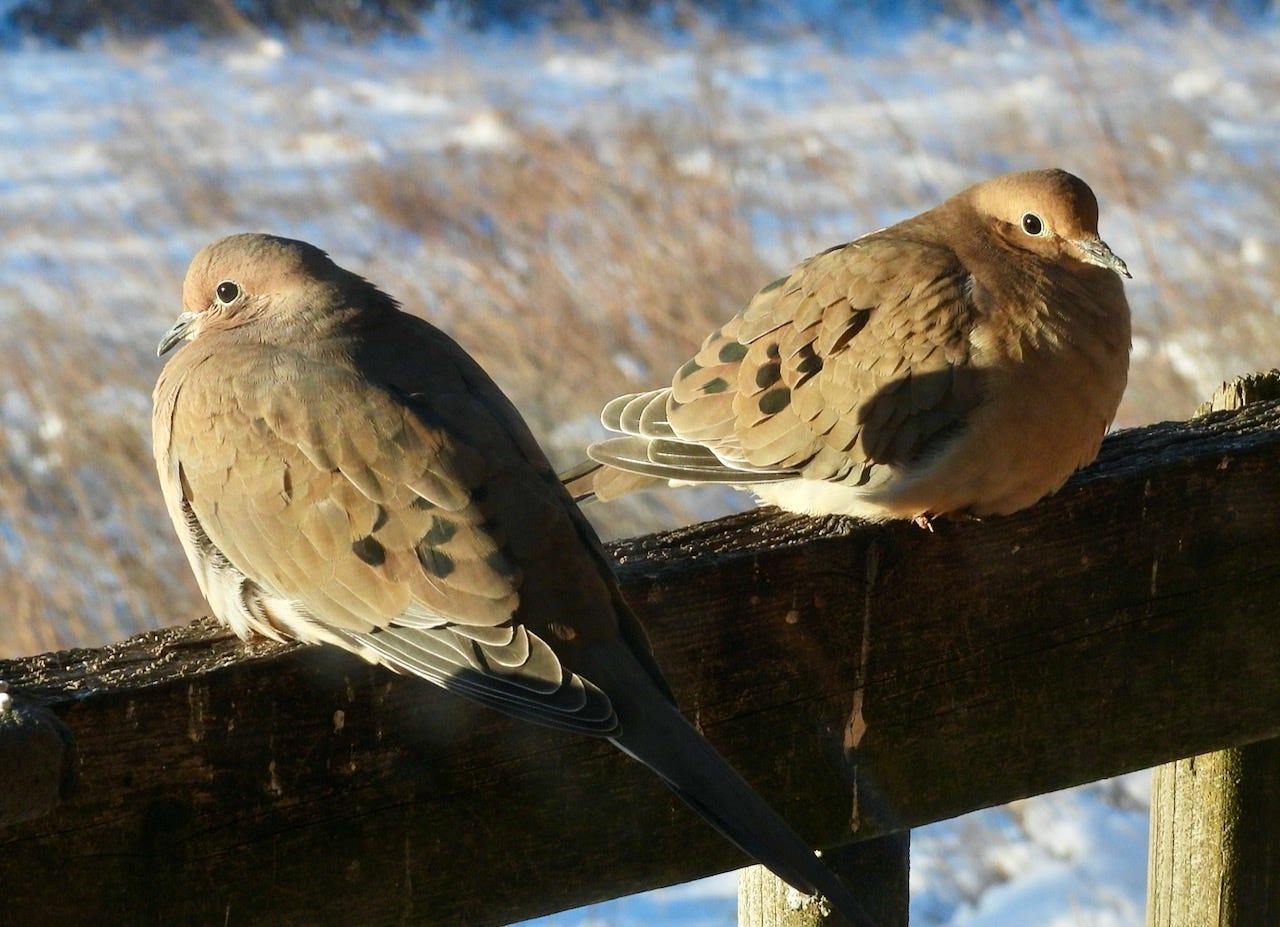
The next morning, our half-dozen lingering mourning doves puff up their feathers in an attempt to stay warm as they wait in line for a breakfast of sunflowers hearts from the feeder on our deck. Are they wondering why they didn’t migrate south in the fall, as most of their clan typically do?
Dark-eyed juncos – sometimes nicknamed snowbirds - remain unfazed by the cold and snow. Iowa IS south to these birds, who nest on the ground in the northern U. S. and Canada and mountainous regions. The juncos are happy to forage on top of the snow, gleaning the scraps of seeds spilled by the doves, blue jays, cardinals, goldfinches, woodpeckers and other birds on the feeder above.
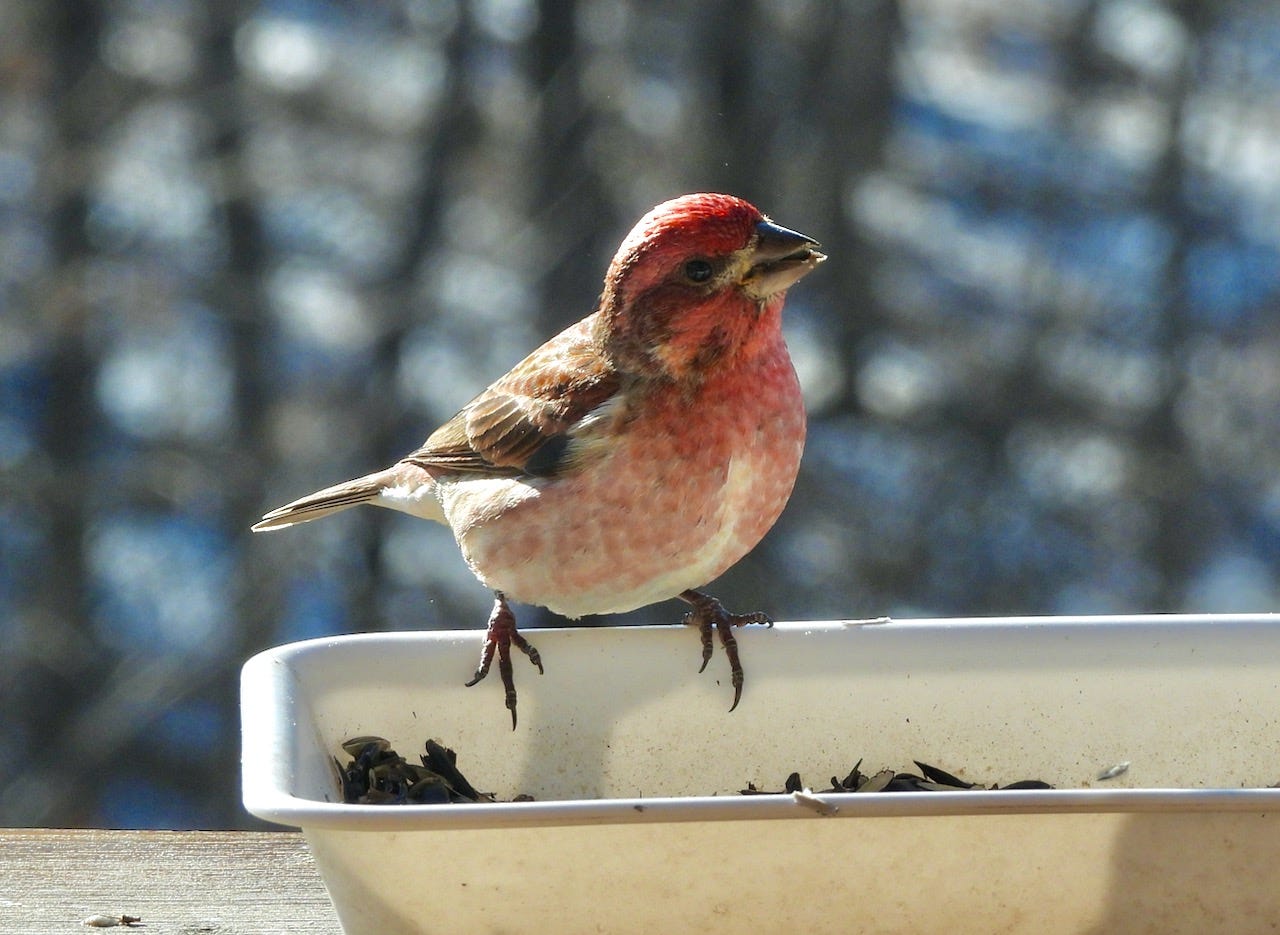
A couple of pairs of purple finches sometimes mingle with the more common winter birds, seemingly in no hurry to wander back north to the coniferous forests where they breed.
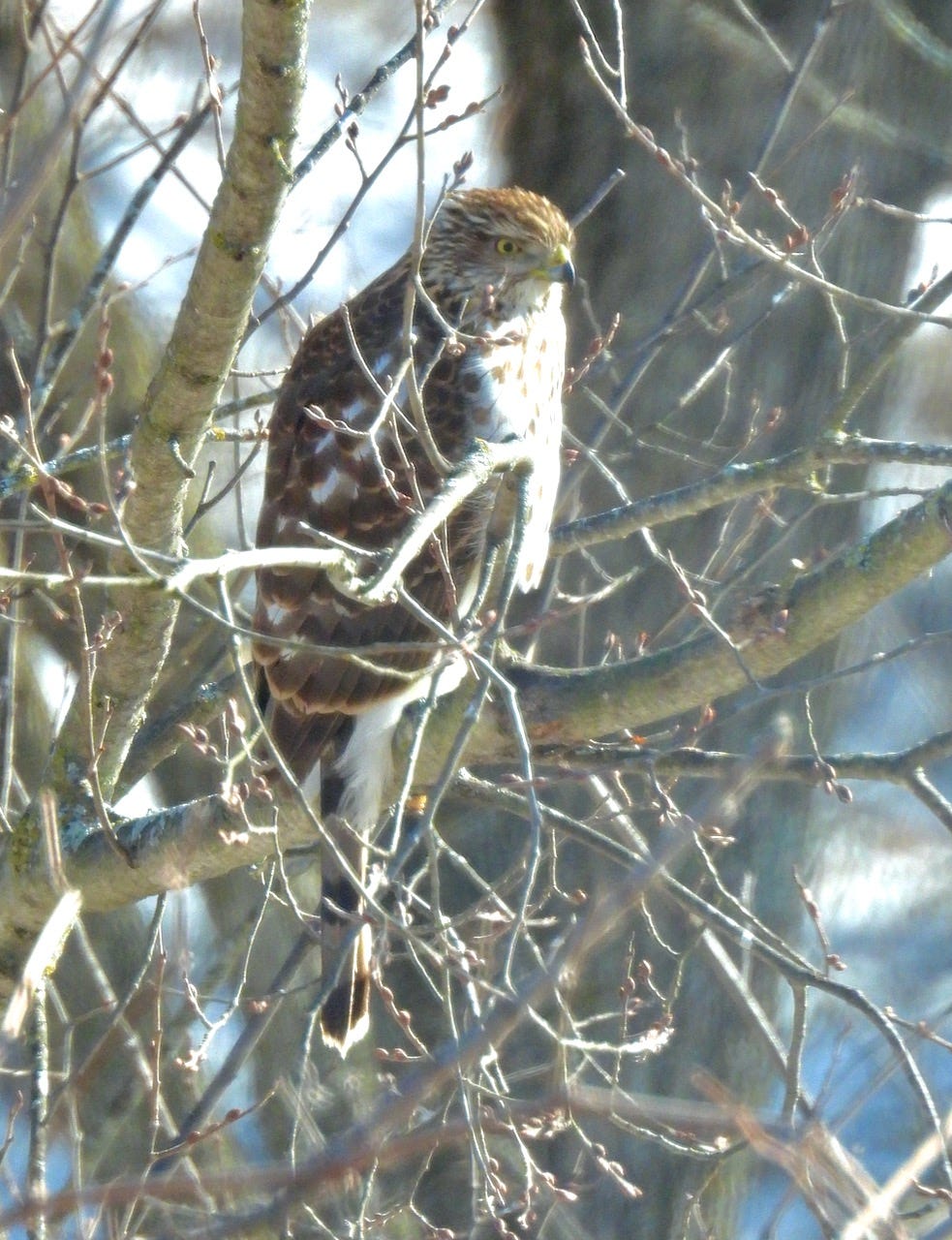
But ALL those birds should keep an eye out for the sharp-shinned hawk that periodically darts through the trees in search of a feathered meal. We thrill to see the sleek raptor, and we might gladly share one of our countless goldfinches with the hungry sharpie – but we hope the little accipiter won’t decide to munch a cute chickadee!
The deer hang out in the evening atop corn stubble hills, where wind may have blown away enough snow to allow the whitetails to scavenge a few kernels. On our lawn, they’ve scraped and pawed down just enough to find a few nibbles of greenish grass. A matt of chicken wire laid over our strawberry bed has protected those greens – so far!
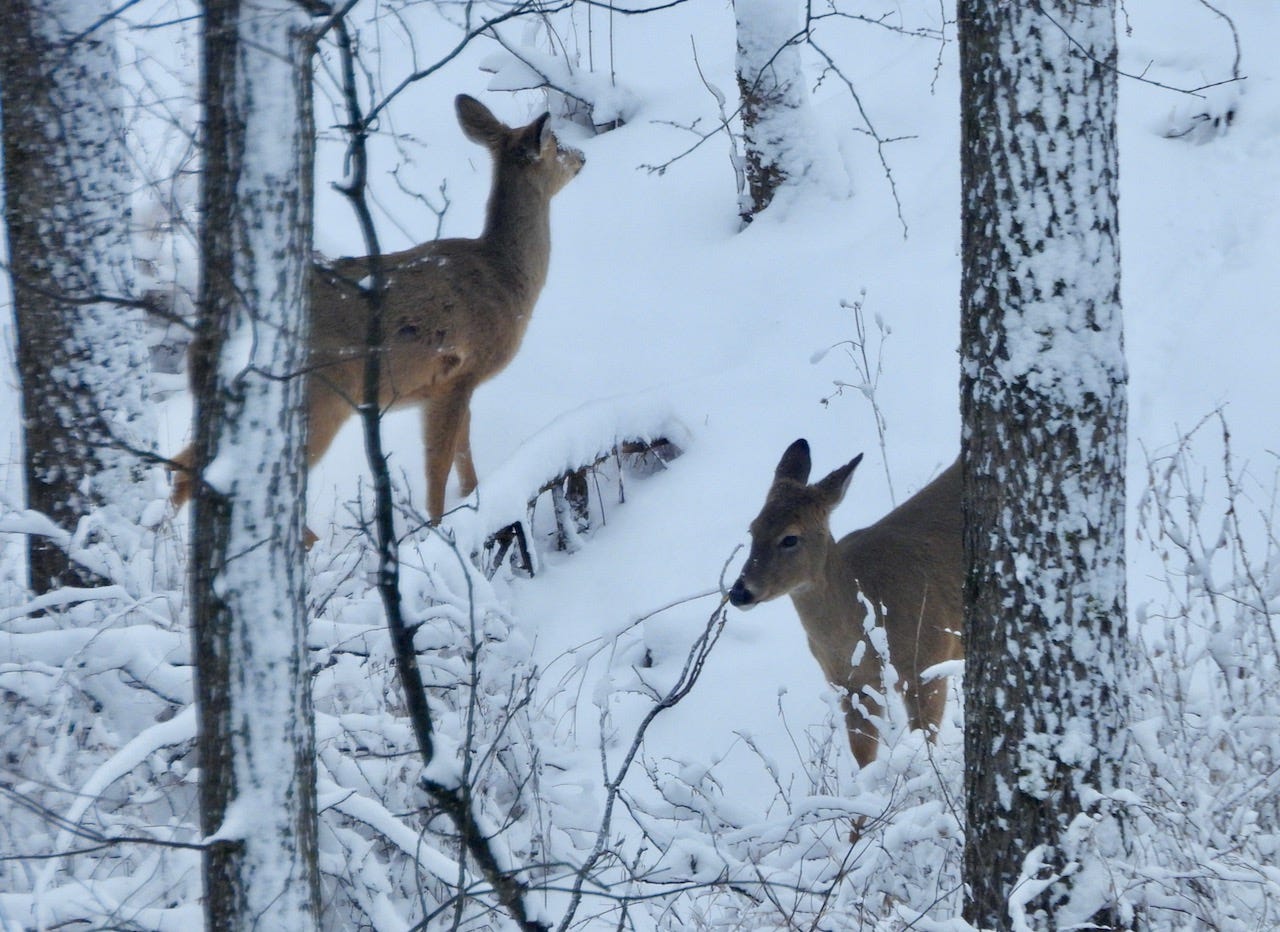
Daytime finds the deer bedded on the wooded hillside out of the wind. At night, they snoop around our compost pile, hoping for some tasty carrot peelings, apple cores, or banana peels.
Near Decorah, the world-famous eagle camera has recorded the first eggs of the season, with Raptor Resource Project biologists eagerly awaiting more. For updates, check eagle camera.
Our resident, nocturnal coyotes have shown up as gray shadows on our trail camera. Their yips and yowls echo through the darkness from the valleys near our house. We wish they would come closer to feast on the parade of white-footed mice that often sneak into the garage.
Our spirits are brightened by the several more minutes of light every day. Soon, the evenings will be even longer – but we early risers will awaken to darkness. Why do we humans insist on tinkering with the clock?
I’m privileged to be a member of the Iowa Writers’ Collaborative. Writers’ Collaborative Please check out the work of my fellow journalists. Most posts are free - but we welcome and appreciate paid subscribers. As a bonus, paid subscribers are invited to join us for two special evenings of music and community on Thursday, April 23, in Storm Lake, and/or Friday, April 24, at Byron’s in Pomeroy.
On Thursday, The Weary Ramblers—members of the Iowa Writers’ Collaborative—will perform in Storm Lake. On Friday, many of our talented singer-songwriter members will take the stage at the legendary Byron’s in Pomeroy, just 30 minutes from Storm Lake.
Another perk for paid subscribers is an invitation to the Office Lounge informal zoom gathering for conversations from noon to 1 p.m. on the last Friday of each month. That’s THIS Friday! I’ll send a link soon.
Great column and photography, of course. Though I live in town, these days, early morning means going out with the dog and listening to early morning bird songs. I go outside accompanied by my cell phone and its Cornell Univ app which identifies the birds and provides information on the birds. The titmouse was a neighbor this week.
As always, paying attention shows the wilds are full of life